

Tower Bolts: A Complete Guide to Types, Uses, Materials, and Benefits
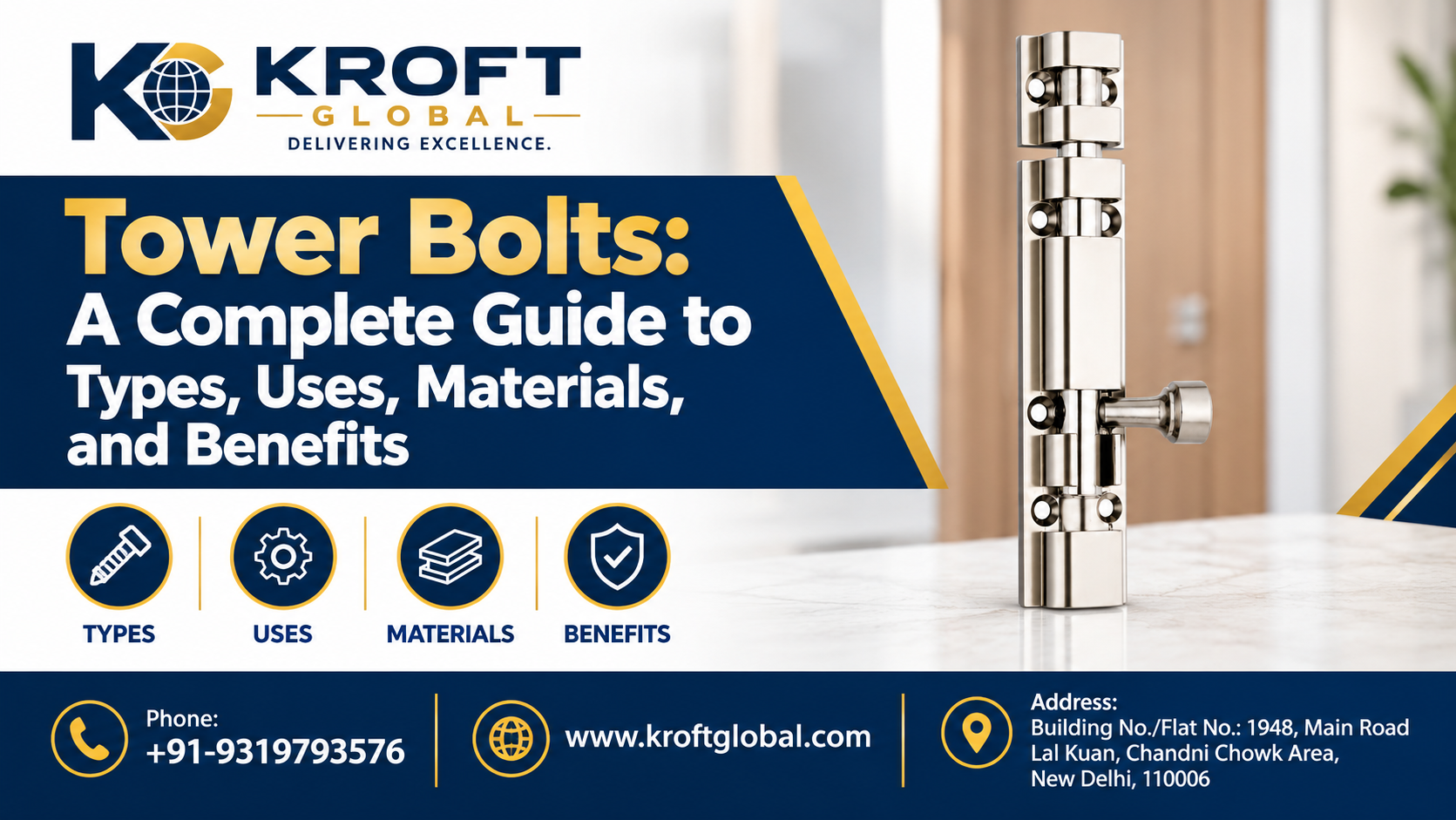
Few pieces of door fastening hardware are as familiar as tower bolts. Mounted on a door, window, or cabinet, a tower bolt slides into a receiver and holds the panel shut. It is simple to operate, easy to fit, and available in many materials and designs, which is why you find it in homes, offices, shops, and workshops alike.
Choosing the right one still takes some thought. Material, size, finish, and the way the bolt will be used all affect how well it works over time. This guide walks through the basics, and points to aluminium tower bolts from Kroft Global for readers who want to explore options.
What Are Tower Bolts?
A tower bolt is a sliding bolt fixed to the surface of a door or window. It has three main parts: a base plate screwed to the panel, a bolt (the sliding rod or bar) that moves within a guide, and a receiver, often called a socket or keeper, fixed to the frame or the adjoining panel. Sliding the bolt into the receiver keeps the door or window closed.
Tower bolts are best seen as supplementary fastening hardware. They are excellent for keeping a door shut from the inside, but they should not automatically replace a suitable lock where real security is needed.
Types of Tower Bolts
Tower bolts are usually grouped by material, and then by shape, length, and finish. The table below gives a general comparison of common material-based categories.
| Type | Key Characteristics | Common Applications | What Buyers Should Consider |
| Aluminium tower bolts | Lightweight and generally corrosion-resistant | Suitable interior doors and selected window applications | Finish, dimensions, and intended environment |
| Stainless steel tower bolts | Good corrosion resistance and durability, depending on grade | Residential and commercial applications | Steel grade, construction, and exposure conditions |
| Brass tower bolts | Decorative appearance and corrosion resistance | Interior doors and decorative hardware applications | Finish, strength, and maintenance |
| Mild steel tower bolts | A practical solution with a suitable protective finish | General-purpose applications | Coating, rust protection, and installation conditions |
Beyond material, tower bolts differ in style. Straight bolts and barrel-style sliding bolts operate in slightly different ways, and designs vary in length, mounting layout, and decorative detailing. Kroft Global’s category page, for instance, lists styles such as Crown, Half Round, Pyramid, Square, and Plain tower bolts, along with an SS tower bolt. Always check the product page for the sizes and variants actually offered.
Materials Used in Tower Bolts
Aluminium is light, easy to handle, and generally resists corrosion, which makes aluminium tower bolts a popular choice for interior doors, windows, and cabinets. Finish matters here: it influences both appearance and how the bolt wears with regular use.
Stainless steel is valued for corrosion resistance and strength, though performance depends on the grade and construction. It suits busier doors and areas with moisture.
Brass offers a classic, decorative look and resists corrosion, but it may need occasional cleaning to keep its appearance.
Coated or mild steel can be a cost-effective, general-purpose option when protected by a good coating. In damp conditions, check the coating carefully for rust protection.
Actual performance depends on material grade, manufacturing quality, finish, installation, and usage conditions, so treat any material as a starting point rather than a guarantee.
Common Uses and Applications
Tower bolts are used on:
- Residential doors and selected windows
- Bathroom and utility doors, where suitable
- Cupboards, cabinets, and storage units
- Office partitions and suitable internal doors
- Commercial buildings and general hardware applications
The right bolt depends on door or window design, the security level needed, how often it is used, and the installation conditions. A cabinet needs something small and neat; a heavy utility door needs a longer, sturdier bolt.
Key Benefits of Tower Bolts
- Simple sliding operation that most people can use without instructions.
- Easy installation on compatible mounting surfaces.
- Choice of materials and designs to suit functional and aesthetic needs.
- Practical supplementary fastening for suitable doors and windows.
- Low maintenance, with routine cleaning and occasional checks.
How to Choose the Right Tower Bolt
- Material: Match it to the environment and how much maintenance you can manage.
- Size and length: Choose dimensions that suit the door or window and give proper engagement with the receiver.
- Door or window thickness: Check mounting compatibility and available clearance.
- Finish: Consider appearance, corrosion protection, and the surrounding hardware, such as aluminium handles or an aluminium aldrop.
- Installation: Confirm the mounting position, screw compatibility, alignment, and ease of operation.
- Usage requirements: Think about how often the bolt will be used and whether extra locking hardware is needed.
- Supplier reliability: Review product details, dimensions, and available variants, and look for clear purchasing support.
Price matters, but it should not be the only deciding factor.
Why Explore Tower Bolts from Kroft Global?
Kroft Global supplies door and window hardware, including handles, hinges, door closers, and hardware fittings. Its aluminium tower bolt category brings together several designs, with options selectable on each product page.
Before ordering, review the specifications, dimensions, finishes, and variants for the product you have in mind. For questions or purchasing assistance, you can contact the Kroft Global team.
Tower Bolt Maintenance and Installation Tips
These are general suggestions, not manufacturer-specific instructions:
- Position the bolt and receiver correctly before final tightening.
- Make sure the sliding mechanism moves freely.
- Use suitable screws and sound mounting points.
- Clean the bolt periodically and check for loose fixings.
- Inspect for corrosion, misalignment, or wear.
- Follow the product’s installation guidance and use hardware appropriate to the mounting surface.
Frequently Asked Questions (FAQs)
1. What is a tower bolt used for?
A tower bolt holds a door, window, or cabinet closed by sliding a bolt into a receiver. It is commonly used as supplementary fastening hardware on residential, office, and commercial doors, offering simple, dependable operation in everyday use.
2. Are aluminium tower bolts good for interior doors?
Aluminium tower bolts are lightweight and generally corrosion-resistant, so they are a common choice for interior doors, windows, and cabinets. Suitability still depends on the finish, dimensions, door weight, and how often the bolt is used.
3. Can a tower bolt replace a lock?
Not automatically. Tower bolts generally add a simple closing function, usually from one side of the door. Where higher security is needed, pair one with a suitable lock rather than relying on the bolt alone.
4. How do I choose the right tower bolt size?
Match the bolt length to the door or window so it engages the receiver properly. Also check panel thickness, available clearance, and the mounting position. Verify the dimensions on the product page before ordering.
5. Which material is best for tower bolts?
No single material suits every job. Aluminium is lightweight, stainless steel offers strong corrosion resistance, brass is decorative, and coated steel is practical. Choose based on environment, appearance, usage, and maintenance expectations.
Conclusion
The best tower bolts are the ones matched to the job: the right material, size, finish, and mounting for the door or window, and a realistic view of the security needed. Good installation and basic upkeep help the bolt work smoothly for longer.
To explore aluminium tower bolt options, visit the Kroft Global product category or get in touch for product enquiries.
- Phone: +91-9319793576
- Email: kroftglobal@gmail.com
- Address: Building No./Flat No.: 1948, Main Road Lal Kuan, Chandni Chowk Area, New Delhi, 110006