

Door Hinges Buying Guide: Materials, Sizes and Key Features
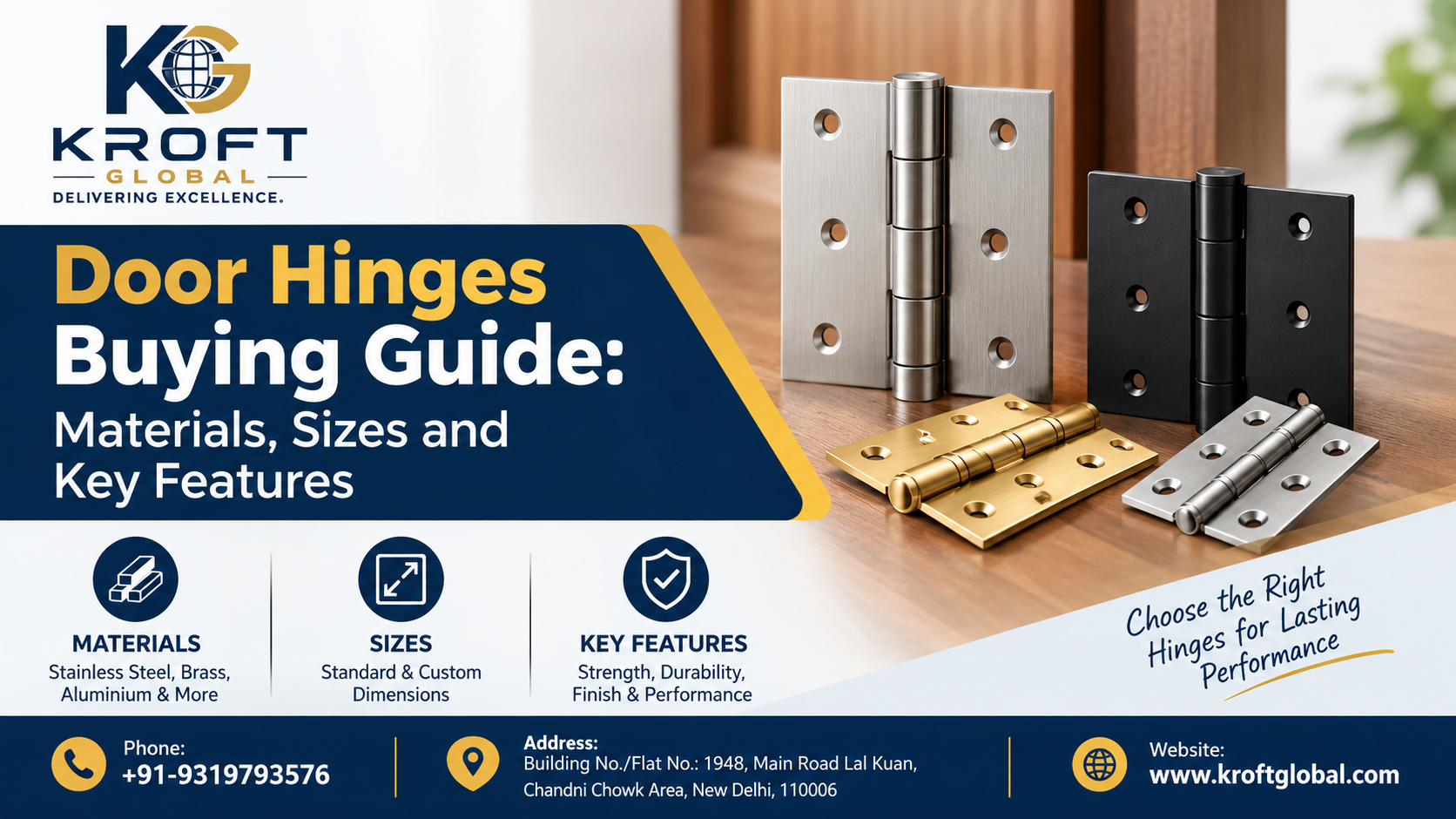
Door hinges are small parts that do a lot of work. They carry the weight of the door, let it swing smoothly, and keep it aligned with the frame. A poorly matched hinge can lead to sagging, squeaking, sticking or early wear, and that costs more in the long run than choosing carefully at the start.
This guide covers the types of door hinges, materials, sizing, key features and common buying mistakes. If you want to compare options as you read, you can explore door hinges from Kroft Global.
What Are Door Hinges and How Do They Work?
A door hinge is a mechanical bearing that connects a door to its frame and allows it to pivot. Most hinges have two leaves, one fixed to the door and one to the frame, joined by a central pin through a series of knuckles. The knuckles rotate around the pin as the door opens and closes.
The right hinge depends on several factors:
- Door material and weight: a solid timber or metal door puts more load on hinges than a lightweight interior door.
- Frequency of use: a busy office door is opened far more often than a storeroom door.
- Installation requirements: frame material, available clearance and mounting method all affect which hinge will fit.
Different Types of Door Hinges
The common types of door hinges serve different purposes. Suitability always depends on the exact product design and the manufacturer’s specifications, so use this table as a starting point, not a final answer.
| Type of hinge | Typical application | Key consideration |
| Butt hinges | Residential and commercial doors | Door weight and installation dimensions |
| Stainless steel hinges | Doors exposed to moisture or demanding environments | Steel grade and corrosion resistance |
| Heavy-duty hinges | Heavier doors and frequent-use applications | Load capacity and mounting strength |
| Concealed hinges | Applications where a less visible hinge is preferred | Door design and compatibility |
| Ball-bearing hinges | Doors requiring frequent, smooth operation | Bearing quality and expected usage |
These categories can overlap. A hinge may be a stainless steel butt hinge with ball bearings, for example, so read the full product details before deciding.
Door Hinge Materials: Which Should You Choose?
Door hinge materials affect durability, appearance and how well the hinge copes with its surroundings. No single material is best for every door.
| Material | Potential benefits | Important consideration |
| Stainless steel | Corrosion resistance and durability, depending on grade | Confirm the grade and environment suitability |
| Brass | Decorative appearance and resistance to corrosion in many applications | Consider cost, strength, and finish |
| Carbon steel | Strength and suitability for many general applications | Protective coating may be necessary |
| Coated metal | Different finishes and added surface protection | Check coating quality and maintenance needs |
Performance varies with grade, manufacturing quality, finish and conditions. Stainless steel hinges are often considered for damp or demanding locations, but the specific grade matters. Brass suits visible, decorative installations. Carbon steel is a practical option for general use, though it may rely on a protective coating. Ask for the material grade and finish details instead of relying on the material name alone.
How to Choose the Right Door Hinge Size
Door hinge sizes are described by a few key dimensions:
- Height: the length of the hinge leaf along the door edge.
- Width when open: the total span of both leaves when the hinge is fully opened.
- Thickness: the gauge of the metal, which relates to strength and fit.
- Mounting pattern: the number and position of screw holes.
There is no universal size that suits every door, and weight capacity differs between products. These practical steps help you get it right:
- Measure the existing hinge if you are replacing one, including the screw hole positions.
- Check the door’s height, thickness, weight and construction.
- Confirm the frame material and mounting requirements.
- Follow the manufacturer’s guidance on load capacity and the number of hinges required.
- Check clearances and the opening angle you need, so the door doesn’t bind against walls or frames.
Key Features to Check Before Buying Door Hinges
Once you know the type, material and size, look at these factors:
- Material quality and corrosion resistance: especially important in humid or outdoor settings.
- Load-bearing capacity: check the rated capacity against your door.
- Smooth movement and construction quality: the pin, knuckles and bearings (if any) should operate without roughness.
- Finish and appearance: the hinge should suit the door and surrounding hardware.
- Screw holes and mounting compatibility: they should match your door and frame.
- Maintenance requirements: some hinges need periodic cleaning or lubrication.
- Intended use: indoor or outdoor.
- Frequency of operation: occasional or constant.
Use this checklist when comparing products:
| Buying factor | What to check | Why it matters |
| Door weight | Manufacturer’s rated capacity | Helps ensure suitable support |
| Environment | Indoor, outdoor, or humid conditions | Helps determine material and finish |
| Dimensions | Height, width, thickness, and mounting pattern | Supports correct installation |
| Usage | Occasional or frequent operation | Helps match the hinge to its workload |
| Appearance | Finish and visible design | Maintains consistency with the door |
| Maintenance | Cleaning and lubrication guidance | Helps support long-term performance |
Common Mistakes to Avoid When Buying Door Hinges
- Choosing on price alone. The cheapest option may not suit your door’s weight or environment, and replacing hinges later adds cost and effort.
- Ignoring door weight. Under-rated hinges can sag over time and affect alignment.
- Selecting the wrong dimensions. Even a small mismatch in leaf size or screw hole position can make installation difficult.
- Overlooking corrosion resistance. A hinge that suits a dry hallway may not hold up in a damp or exposed location.
- Not checking frame compatibility. Metal, timber and other frames may need different fixing approaches.
Measuring carefully and reading product details before ordering avoids most of these problems.
Door Hinges for Residential and Commercial Applications
Requirements differ between homes, offices, shops and other premises. Residential interior doors often prioritise appearance and quiet operation. Commercial doors may see heavier traffic, more demanding conditions and stricter security or installation requirements. Whatever the setting, let these factors guide your choice:
- Door construction and weight
- Traffic levels
- Environmental exposure
- Security needs
- Installation conditions
Always confirm a product’s suitability for your application against its listed specifications.
Why Explore Door Hinges from Kroft Global?
Kroft Global offers a range of hinges that you can browse on its door hinges category page. It is a useful place to review the available products side by side.
Before choosing, compare product details, dimensions, materials, finishes and application suitability. If you are unsure whether a product fits your door, contact the team with your door’s measurements and usage requirements.
Frequently Asked Questions About Door Hinges
How many hinges does a door need?
It depends on the door’s height, weight and construction. Many standard doors use more than one hinge, but heavier or taller doors may need additional support. Check the manufacturer’s guidance for your product.
Are stainless steel hinges always the best choice?
Not necessarily. They are often considered for moisture-prone or demanding environments, but performance depends on the grade and the conditions. For indoor, decorative or low-exposure use, other materials and finishes may suit just as well.
How do I measure a door hinge for replacement?
Measure the hinge height, the width when open, the leaf thickness and the screw hole positions. Taking the old hinge with you, or sharing its measurements, makes matching easier.
What are heavy-duty hinges used for?
They are generally intended for heavier doors or frequent use. Always check the rated load capacity and mounting requirements for the specific product.
Do door hinges need maintenance?
Some benefit from occasional cleaning and lubrication to keep movement smooth. Follow the manufacturer’s recommendations for your hinge type and finish.
Conclusion
Choosing the right door hinges comes down to matching material, dimensions, load capacity, finish and intended use to your door and environment. Checking specifications and avoiding common mistakes helps you end up with hinges that perform well and suit your installation.
When you are ready to compare options, review the range at Kroft Global’s door hinges page or get in touch with your requirements.
- Phone: +91-9319793576
- Email: kroftglobal@gmail.com
- Address: Building No./Flat No.: 1948, Main Road Lal Kuan, Chandni Chowk Area, New Delhi, 110006